


Ask most marketing teams about AI bot traffic and they’ll describe scrapers, click farms, or the obvious junk GA4 already filters out. That definition stopped being complete in 2026.
We already covered how to spot that older kind of bot traffic in GA4. This piece is about a newer, messier problem: AI agents and agentic browsers. They don’t behave like bots, and they don’t behave like humans. They’re showing up in ad accounts fast enough to distort the metrics you use to judge a campaign.
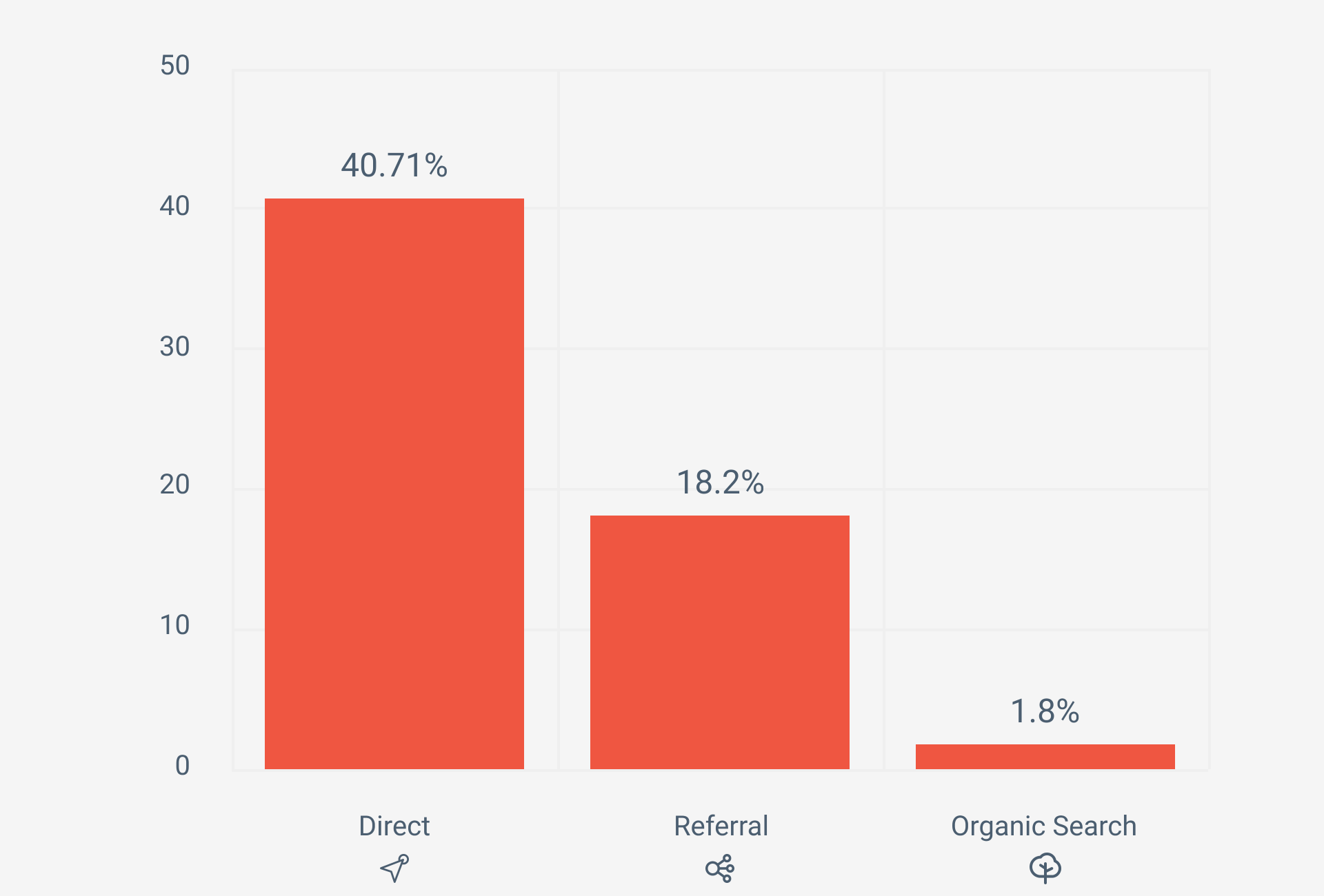
- How fast agentic traffic actually grew in 2026
- Why global invalid traffic jumped from 26% to 40% in six months
- Not all AI traffic is bad: what Opticks actually measured
- Why agentic traffic breaks your analytics assumptions
- How to tell agentic traffic apart from a real bot or a real person
- FAQ
How fast agentic traffic actually grew in 2026
The scale caught most measurement tools off guard. HUMAN Security’s 2026 benchmark found AI agent and agentic browser traffic grew 7,851% in twelve months, with automated traffic now growing eight times faster than human traffic. DataDome recorded 17.7 billion AI agent requests in Q2 2026 alone (a 45% jump from the previous quarter). The 2025 Imperva Bad Bot Report had already found automated traffic crossing 51% of all web traffic, the first time bots outnumbered humans online in over a decade.
None of that is inherently fraud. An AI browsing agent completing a purchase on a real customer’s behalf is still a real customer. The problem is that most ad platforms and analytics tools still only have two buckets: human or bot, and agentic traffic doesn’t sit cleanly in either one.
Why global invalid traffic jumped from 26% to 40% in six months
According to an Anura executive brief, global invalid traffic rates moved from 26% in January 2026, to 31% in February, to 40% by June, a roughly 50% increase in half a year. Anura attributes most of that acceleration to Sophisticated Invalid Traffic (SIVT) operations now using AI to mimic human browsing: realistic mouse movement, natural scroll depth, human-length session durations. That’s exactly the kind of traffic engineered specifically to beat the checks most teams rely on, which is also why manual GA4 checks increasingly fall short on their own.
To put the financial size of this in context: global digital ad spend passed $750 billion in 2025, and a conservative estimate puts $165 billion of that lost to invalid traffic in the same year, before this year’s acceleration in AI-driven SIVT.
Not all AI traffic is bad: what Opticks actually measured
It would be easy to treat every AI-driven visit as AI bot traffic. Our own data says that’s the wrong instinct for at least one category: AI chat tools sending you real visitors.
Over the last 15 months, Opticks has tracked a steady increase in traffic arriving at client sites from Copilot, ChatGPT, and Gemini: people asking an AI assistant a question and clicking through to a site it recommended. That traffic is organic and generally very clean, close in quality to traditional organic search traffic, not to the SIVT problem described above.
The distinction matters: traffic referred by an AI chat tool (a person, using AI as a search engine) is a different category from traffic generated by an AI agent acting autonomously (software browsing, clicking, or filling forms without a person watching in real time). The first is a new, clean acquisition channel. The second is the one inflating invalid traffic numbers industry-wide.
Why agentic traffic breaks your analytics assumptions
Standard analytics models assume roughly one session per visit and one visit per person. Agentic traffic breaks both assumptions at once: a single person can spin up dozens of parallel agent sessions to compare prices, fill forms, or complete a task, and those agents frequently reuse the same IP ranges and device fingerprints as each other, sometimes even as the infrastructure bad bots already use.
In e-commerce specifically, bad bot traffic alone can already account for up to 25% of sessions, before agentic traffic is added to the mix. When a channel’s session count and conversion rate both move in ways that don’t match each other, this is increasingly why.
How to tell agentic traffic apart from a real bot or a real person
The 7 GA4 signs we covered previously (high unattributed Direct traffic, near-zero session durations, flat bounce rates, geographic mismatches) still apply and are still the right place to start. Agentic traffic adds a few signals on top of those:
- Humanlike behavior that’s too consistent. Realistic mouse movement and scroll depth repeated at near-identical timing across sessions is a sign of simulation, not a sign of a real person.
- Shared infrastructure across “different” visitors. Multiple sessions, supposedly from different people, resolving to the same IP range or device fingerprint in a short window.
- Task-shaped navigation. A visitor moving directly from entry to a specific form or checkout step, with none of the back-and-forth browsing a person comparing options usually shows.
- Session bursts with no matching demand signal. A sudden run of sessions on one page or campaign with no corresponding spike in brand search, social mentions, or ad spend to explain it.
None of these confirm agentic traffic in isolation: the point, as with the original GA4 checklist, is to look for two or three lining up on the same channel.
AI agent traffic grew 7,851% in 12 months.
Source: HUMAN Security 2026 benchmark. Most analytics stacks still weren’t built to tell it apart from a real visitor, or from a bot.
See which of your sessions are agentic, bot, or real: automatically, not by eyeballing a spreadsheet.
Start your free trial →
FAQ
What is AI bot traffic?
AI bot traffic (also called agentic bot traffic) is visits generated by AI agents or agentic browsers acting autonomously: browsing, clicking, or filling in forms without a person watching in real time, not a person using a browser, or a traditional bot like a scraper.
Is ChatGPT or Copilot traffic the same as AI bot traffic?
No. Opticks’ own data shows traffic referred by AI chat tools like ChatGPT, Copilot, and Gemini, where a person asked a question and clicked through, is clean, organic traffic. It’s similar in quality to traditional organic search. AI bot traffic refers to AI agents browsing or transacting on their own, a different category entirely.
How much has invalid traffic grown because of AI in 2026?
According to an Anura executive brief, global invalid traffic rose from 26% in January 2026 to 40% by June 2026, an increase Anura attributes largely to AI-driven Sophisticated Invalid Traffic (SIVT) that mimics human browsing behavior.
Can GA4 detect agentic AI traffic on its own?
Not reliably. GA4’s built-in filtering only excludes traffic that declares itself as a bot, using the IAB/ABC International Spiders and Bots List. Agentic traffic is specifically built to look human, which is exactly what that list isn’t designed to catch.
Does agentic traffic affect every industry equally?
No. E-commerce sees some of the heaviest exposure, with bad bot traffic alone accounting for up to 25% of sessions in the vertical before agentic traffic is factored in, since high-intent, transactional flows are what AI shopping and browsing agents are increasingly built to automate.
Leave a Reply