

Picture the scene: you’ve put time, effort, and money into crafting the perfect Google Ads campaign. It’s just launched, and you’re waiting to see the results it deserves. But when you check your account, you’re not thrilled with what you see: invalid clicks. If that’s you, you’re probably wondering how to get a Google Ads refund for the budget those clicks wasted.
Google Ads campaigns can be expensive, and every invalid click from fraudsters or competitors clicking on your Google Ads drains your budget unfairly. Even with Google’s own traffic monitoring, invalid clicks often slip through the cracks.
If you’ve spotted what look like invalid clicks on your campaigns, you can claim a Google Ads refund to claw back that wasted budget. This article walks through exactly how to compile and submit a Google Ads refund claim.
What makes you eligible for a Google Ads refund?
You’re eligible for a Google Ads refund once you can show Google clear evidence of invalid clicks on your account. Google won’t accept a vague complaint: you need specific data and information to prove your case.
It’s not a case of sending Google your entire ad click history, either. You’ll need to spend real time sifting through your data, since Google asks for very specific information, and the burden is on you to provide it correctly.
What information do you need to request a refund?
You’ll need to gather a fair amount of information before you can submit your claim. To request a Google Ads refund, you’ll fill out a form asking for:
- Your customer ID
- The start and end dates of the suspected invalid clicks
- The affected campaigns
- The ad groups and keywords affected
- A list of the IP addresses the invalid clicks originated from
- Details of any ads approved during the last month
- Details of bids and/or budgets that have increased
- A list of any Display/Search networks you’ve opted into
- Details of any suspicious display placements
- Whether you’ve checked your Google Ads account for invalid clicks
You’ll also need to write a detailed explanation of the issue. It’s good practice to attach copies of your tracking data or web logs too, to back up your claim and help Google take it seriously.
Gathering all that evidence by hand is exactly the kind of busywork Opticks removes. See a real-time breakdown of every IP, click, and campaign hit by invalid traffic, the same evidence a refund claim asks for, without the spreadsheets.
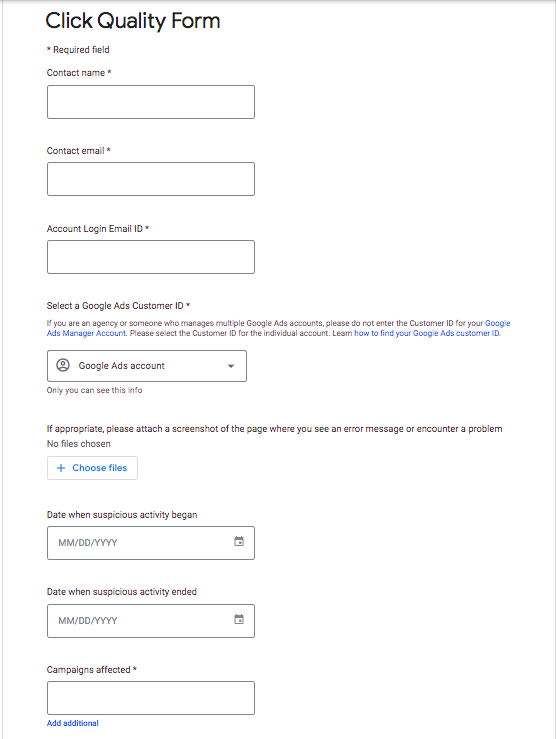
Example of Google’s Click Quality Form.
That’s a long list to gather and fill in, and it can take Google up to six weeks to process each claim. If the information you submit isn’t accurate, Google can even revoke your ability to request refunds in the future.
This form is the only way to request a refund, and there’s no guarantee Google will grant one, even after all that effort.
Keep in mind: you can only raise a claim once every 60 days, since Google doesn’t take responsibility for traffic older than that.
How do you submit the claim?
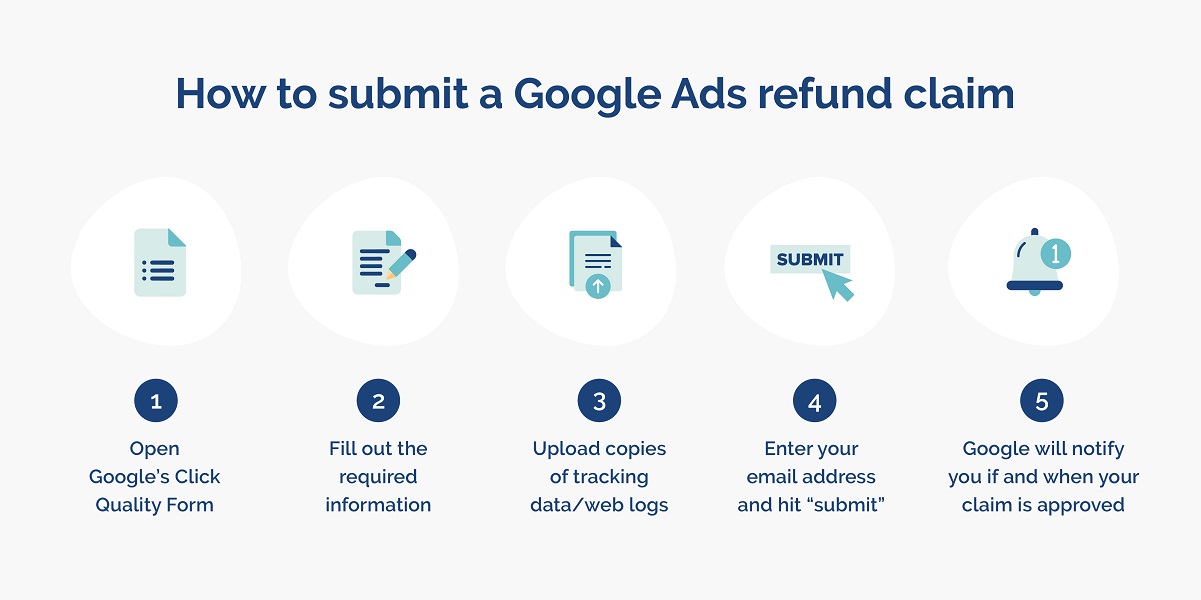
- Head to Google’s Click Quality Form.
- Fill it out with all the information listed in the section above.
- Upload copies of your web logs or tracking data.
- Enter the email address where you’d like Google’s response, and hit submit.
- If Google approves your claim, it will notify you, and you’ll see the returned credit under Billing > Transactions > Adjustments.
Preventing invalid clicks beats filing refund claims
Rather than retroactively trying to fix the damage fraudsters or competitors do to your budget, it’s worth getting serious about fraud prevention instead.
No matter your organization’s size, it’s unrealistic to rely on filling out Google’s form every time you suspect invalid clicks. There’s no guarantee of a refund, and you’re spending time on something you could prevent entirely.
Opticks’ real-time anti-ad fraud solution detects and blocks invalid clicks before they eat into your budget.
Bad bots alone caused over half of all the invalid traffic Opticks flagged in 2025, exactly the kind of traffic a Google Ads refund claim can’t catch in time.
Opticks, 2025 Annual Ad Fraud Report
See the full picture in our ad fraud benchmarks, or get a live breakdown of your own invalid traffic in minutes.
Stop filing refund claims. Start blocking invalid clicks before they happen. See exactly how much of your own traffic is invalid, right now, or talk to our team for help building your case.
Comments
One response to “How to Claim a Google Ads Refund for Invalid Clicks”
[…] However, advertisers might still see a percentage of invalid clicks slip through the system without an automatic refund. If you suspect this is happening on your account, Google lets you request an investigation directly through its Click Quality Form. For the exact steps to request a refund, see our guide on how to claim a Google Ads refund for invalid clicks. […]