


What many marketers suspected for a long time has finally been confirmed: Organic traffic fraud, or invalid traffic, harms SEO.
The evidence comes from a recent leak of Yandex’s ranking factors. It clearly shows that organic traffic fraud has a direct impact on a website’s SEO positioning. Google and other search engines weigh these ranking factors slightly differently, but they mostly use the same concepts. So regardless of what search engine you’re targeting, you need to know how organic traffic fraud affects your SEO rankings. You also need to know what you can do about it.
With this in mind, the discussion naturally pivots to how invalid traffic and ad fraud affect organic traffic. However, since there’s no payment involved in organic traffic, “organic traffic fraud” is technically a misnomer. “Invalid traffic” is the more suitable term for traffic that negatively impacts your SEO efforts.
Here, we take a look at how invalid traffic impacts your SEO activities and who’s performing the ad fraud behind it. We also cover the indicators that it’s present in your organic traffic, and how to prevent it.
What is invalid traffic? Can it be bots?
Invalid traffic refers to any clicks, impressions, or other ad interactions generated through fraudulent means. This can include bot traffic, click farms, and other forms of fake engagement designed to artificially inflate ad metrics.
Within organic traffic, bots often perform certain types of ad fraud. However, individuals also carry out several different ad fraud techniques.
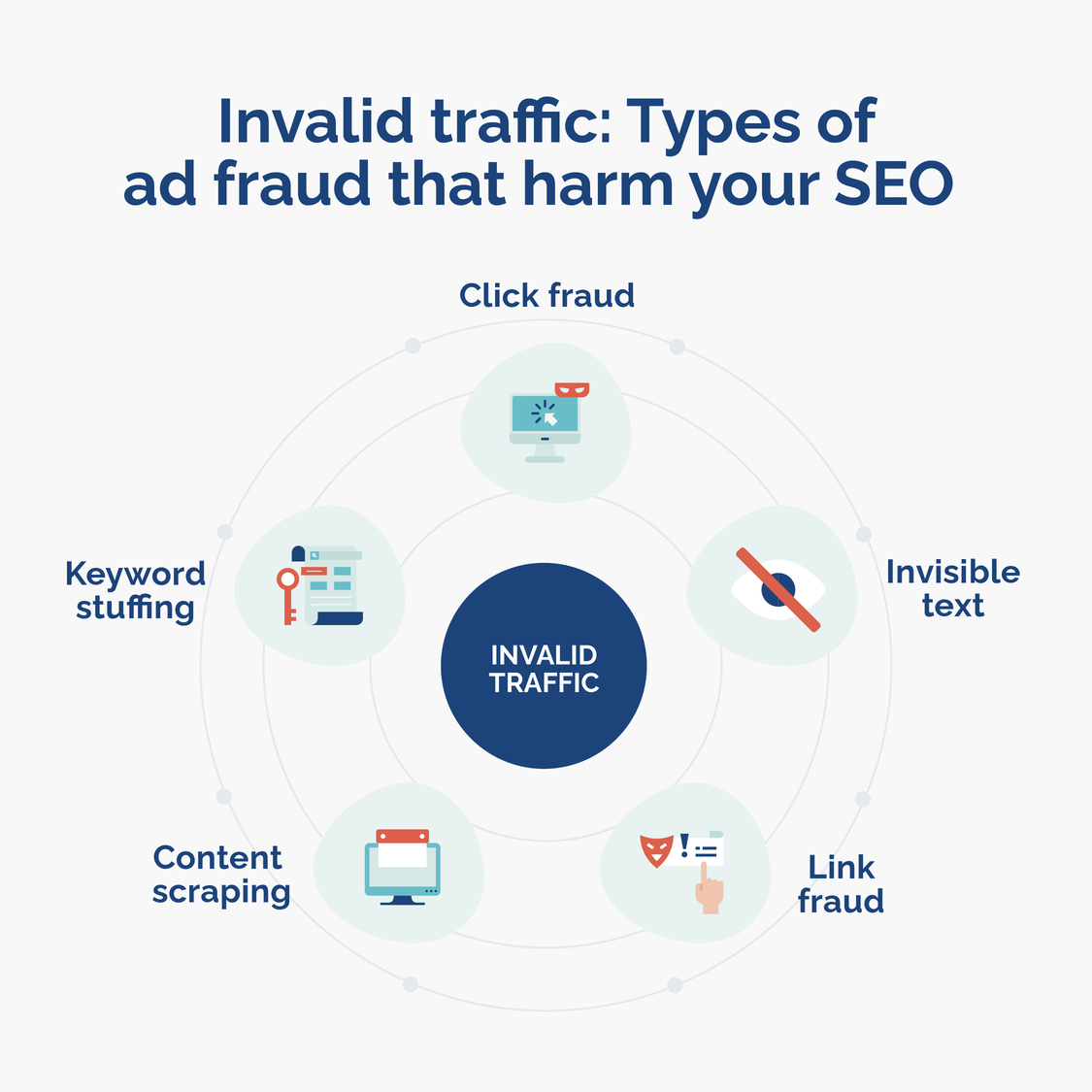
Ad fraud types affecting SEO efforts
- Click fraud: When a bot or person repeatedly clicks on ads or search engine results, inflating the number of clicks in order to generate more revenue.
- Content scraping: A person copies content from legitimate websites and publishes it on fake websites to generate traffic and improve search engine rankings.
- Keyword stuffing: An individual adds irrelevant or excessive keywords to web pages to manipulate search engine rankings and generate more traffic.
- Invisible text: Hidden text is added to web pages that can only be seen by search engines, intending to manipulate rankings.
- Link fraud: When someone creates fake links to a website to improve its search engine ranking.
Invalid traffic ad fraud affecting social media
Invalid traffic also affects social media channels. Here’s how:
- Using automated bots or click farms, people can buy fake followers or likes which can lead to misleading or inflated metrics.
- Fraudsters engage in attribution fraud by using malware to steal credit for legitimate leads that originated from a different media source.
Who is behind invalid traffic?
Several actors could be behind the invalid traffic that affects SEO:
Competitors
Competitors drive invalid traffic in a bid to damage their rivals’ search engine ranking and gain an unfair advantage.
Fraudsters
Fraudsters often include traffic fraud as part of their efforts to defraud advertisers and generate fraudulent ad revenue.
Website owners
Website owners will engage in traffic fraud to try to boost their search engine ranking and increase their revenue from ads.
Bot operators
Bot operators will use bots to generate fake organic traffic for websites that they can then sell to site owners or use to defraud advertisers.
Why should advertisers — and any site owner — care about invalid traffic? What are the consequences?
Invalid traffic significantly disrupts both your campaign and SEO efforts in the following ways:
Impacts all SEO-related efforts
There are several ways that invalid traffic impacts SEO efforts. Firstly, when a website receives a high number of fake impressions and clicks, click-through rates can suffer. That’s because fake traffic limits the amount of real organic traffic reaching the site. This happens when search engines view the traffic as low quality, which can lower search engine rankings drastically.
Alternatively, fraudsters or competitors might engage in click fraud on other websites to artificially inflate traffic numbers. When they do, the ranking of other legitimate websites can decrease.
Depletes overall budget
Just as invalid traffic damages paid traffic efforts, it also wastes your budget in other areas. Even though organic traffic is “free,” SEO and social media still cost real money in human resources.
Worst of all, your sales team could be chasing “leads” that never even filled out a form. That practice could actually be unlawful, and it’s another waste of time that reduces your opportunity to acquire real customers.
Skews analytics
Large volumes of invalid traffic also skew your analytics. You end up making strategic decisions based on inaccurate data, making it hard to know if your strategy is working.
What can you do to prevent invalid traffic?
To prevent invalid traffic, organizations can build a “honeypot”: a hidden form that only bots can see. It acts as a decoy to lure fraudsters, helping teams detect and prevent fraudulent activity. When someone fills out a honeypot lead, businesses know it’s not human.
However, sophisticated bots, malware, and human fraud farms won’t fall for a honeypot. Only a robust anti-ad fraud solution can prevent invalid traffic from damaging your organic traffic and SEO efforts.
Want to learn how the expert team at Opticks prevents invalid traffic before it can damage your SEO activities? Contact us to schedule a free demo today.